Vine Status
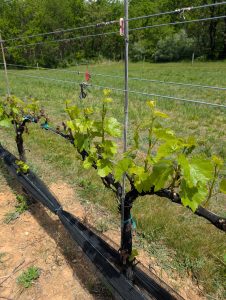
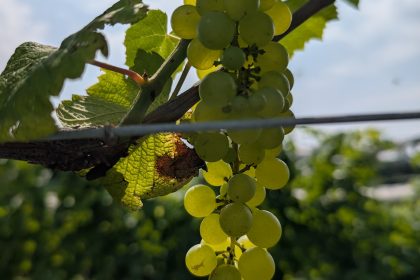
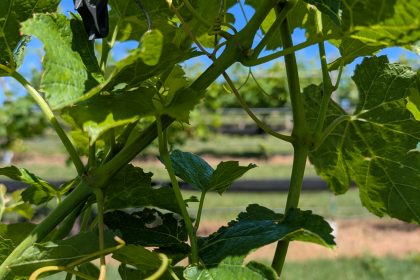
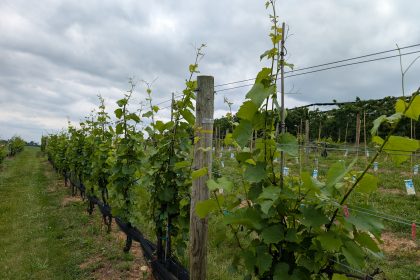
Things are still slow, but moving. Our Chardonnay vines started to push secondary buds. On the other hand, some primary buds that survived the freezing events are developing rapidly. These staggered phenological stages will make disease management tricky. We probably need to cast a wider net to cover several diseases, more so than usual.
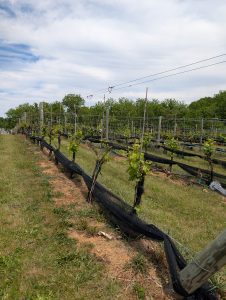
On the other hand, some of our hybrids such as Chardonnay, Corot noir, and Vidal blanc seem to push more, some with visible clusters, even though these vines were located below the Chardonnay block.
Disease risks 5/6-5/13/2026
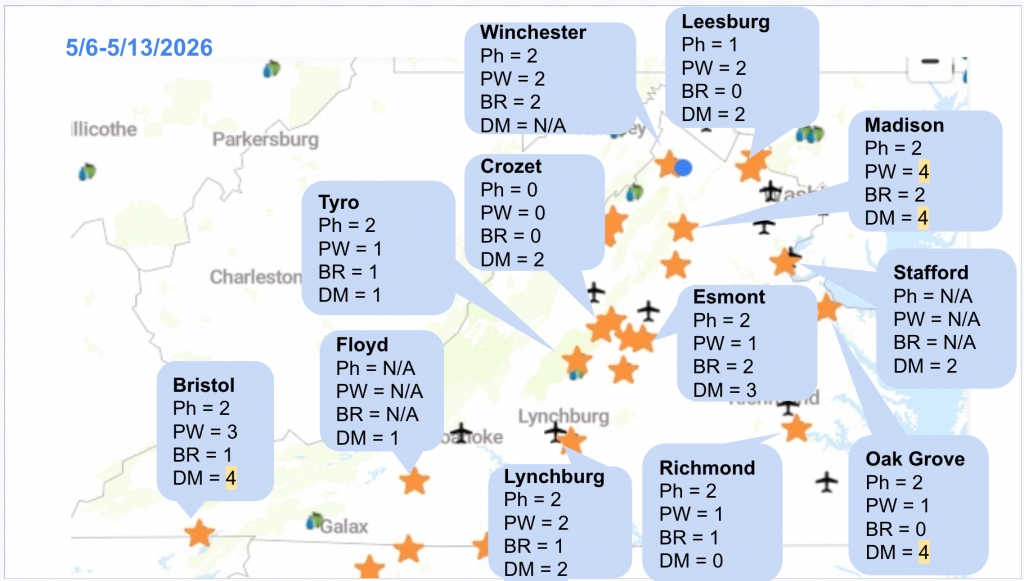
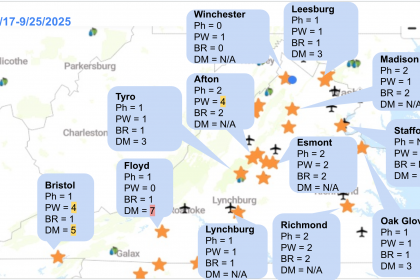
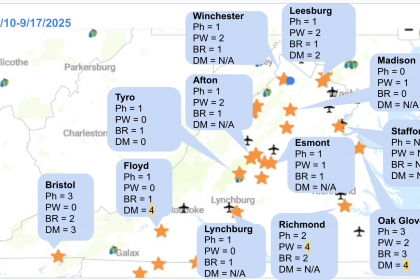
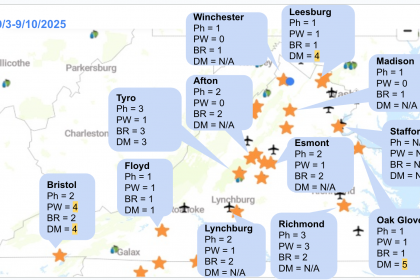
NEWA is an Agricultural Weather Station Network, and we are part of the team. Here is a snapshot from the last week, showing the number of days with the risk of each disease: Ph = Phomopsis, PW = Powdery mildew, BR = Black rot, and DM = Downy mildew. N/A means there is no data or issues with the NEWA. I am waiting to hear back from the weather station company about fixing the one in Stafford.
There are some locations with 2-3 days of downy mildew risk events in the last seven days. Madison, Oak Grove, and Bristl had four days (out of seven) of downy mildew risk events.
Downy mildew forecast

It looks like the model (which accounts for both historical and forecast data) is calling for quite a few moderate downy mildew infection risk events next week (Click to enlarge the table). Please keep an eye on the weather forecast and your spray record to make decisions. As usual, prevention is the best approach. Please refer to my previous post about downy mildew management, or the information below
The downy mildew forecasting effort is supported by the Virginia Wine Board.
Pre-bloom/Bloom Grape Disease Management
Bloom begins a critical period for cluster infections by downy mildew, powdery mildew, black rot, Botrytis, and ripe rot, as the pathogens responsible for these diseases can infect flower parts. Symptoms may appear shortly after infection with downy and powdery mildew, or closer to harvest time with Botrytis and ripe rot.
I recommend applying protective materials to shield the tissues for 4-6 weeks for V. vinifera varieties and 3-4 weeks for V. labrusca varieties. This translates to approximately 3-4 sprays for V. vinifera and 2-3 sprays for V. labrusca. Hybrids typically fall in the middle, requiring about 4-5 weeks of protection. As always, ensure that you rotate the modes of action by using different FRAC (Fungicide Resistance Action Committee) groups.
Below is a list of materials for each disease. Please consider your specific circumstances, including the site, cultivar, disease history, recent weather, and upcoming weather forecasts, before making your decisions. In general, it is more effective, cost-efficient, and better for the environment to protect your vines rather than try to recover diseased ones. Do not wait until you observe signs of disease!
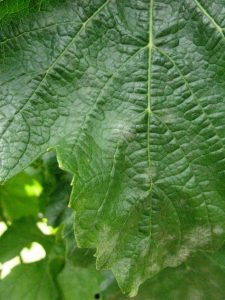
Powdery Mildew: Sulfur (FRAC M2) is a cost-effective option for preventing powdery mildew. While copper (FRAC M1) is also effective against powdery mildew, my experience shows that the copper formulation I used was slightly less effective than sulfur. Other materials that can be used to combat powdery mildew include:
- DMI fungicides (e.g., Rally, Elite, Mettle, Rhyme, Ceyva, etc.; FRAC 3)
- Quintec (FRAC 13)
- Vivando (FRAC 50)
- Luna Experience (FRAC 7 + 3)
- Topguard EQ (FRAC 11 + 3)
- Aprovia (FRAC 7)
- Aprovia Top (FRAC 7 + 3)
- Miravis Prime (FRAC 7 + 12)
- Torino (FRAC U6)
When using these fungicides, please remember to rotate FRAC codes. It’s advisable to limit the use of a particular FRAC code to twice per season, except for those beginning with the letter “M.” It would be a great idea to mix a powdery mildew material with either sulfur or copper.
Unfortunately, in Virginia, there is widespread resistance to QoI fungicides (FRAC 11, e.g., Abound, Flint) among powdery mildew isolates, so I would not rely on QoI materials for effective powdery mildew management.
Also, there is growing evidence/concern about DMI resistance. Unlike that of QoI, which became ineffective, you will see reduced efficacy over time. Once again, the tank-mix with sulfur or copper is recommended.
Suppose you’ve experienced a powdery mildew outbreak, especially on clusters, in the past few years, and are concerned about it. In that case, we have had success with pre-bloom applications of a combination of SDHI and DMI fungicides (i.e., use synthetic materials before bloom).
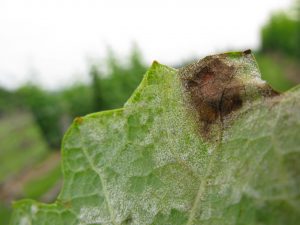
Downy Mildew: Protective materials for managing downy mildew include: Mancozeb (FRAC M3) [Gavel, which contains mancozeb + zoxamide (FRAC 22)], Captan (FRAC M4), fixed copper (FRAC M1), Revus or Forum (FRAC 40), Zampro (FRAC 40 + 45), and Ranman (FRAC 21).
Important Note: There are increasing cases of Revus-resistant downy mildew isolates in Virginia. Additionally, resistance to Ranman has been observed among downy mildew pathogens affecting other crops. Ensure you spray before rain and rotate the FRAC codes to manage resistance effectively!
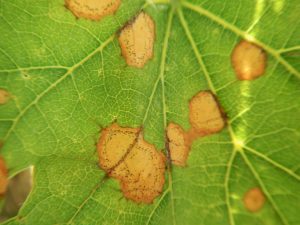
Black rot: The protective materials for managing black rot include Mancozeb, QoI fungicides (FRAC 11, such as Abound, Flint, Pristine, Intuity, etc.), and DMI fungicides (FRAC 3, like tebuconazole, Elite, Rally, Rhyme, etc.). Please note that captan and copper treatments are ineffective against black rot. Additionally, there are concerns about fungicide resistance with FRAC 3 materials in New York. While I haven’t observed this trend in my vineyard, if you feel your DMI products aren’t effectively controlling black rot, please reach out to me.
Kick-back Materials for Downy Mildew and Black Rot: Several materials exhibit kick-back activity against downy mildew and black rot. These include Ridomil products (FRAC 4) and phosphonate products (FRAC P07, such as Prophyt and Phostrol, aka phos acids) for downy mildew, and myclobutanil (FRAC 3, DMI) for black rot. These materials can be effective if applied between the time of infection and the establishment of the pathogen. It is crucial to spray within 3-4 days after rainfall (i.e., after the rain, but before you see symptoms).
Currently, we do not have any eradicants that can eliminate already established pathogens. It is important to note that infection can occur very quickly on flowers and young fruits. Therefore, instead of solely relying on kick-back action, it is advisable to protect the vines proactively.
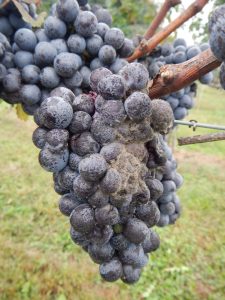
Botrytis: The development of Botrytis is influenced by the types of grape varieties you grow and your canopy management strategies. White-fruited varieties with tight cluster architectures tend to be more susceptible to Botrytis. In contrast, red-fruited varieties with looser clusters typically experience fewer issues with this fungus, especially when the canopy is well maintained. Since the Botrytis pathogen thrives in high humidity, a poorly managed canopy that traps moisture can exacerbate the problem.
Bloom time is crucial for managing Botrytis, as this fungus can infect flowers and their debris, with symptoms appearing later as the berries mature. There are various materials available for controlling Botrytis, including Rovral and Meteor (FRAC 2), Elevate (FRAC 17), Vanguard and Scala (FRAC 9), Luna Experience (FRAC 7+3), Kenja (FRAC 7), Miravis Prime (FRAC 7 + 12), and Switch (FRAC 9 + 12). Please mix one of these materials with either captan or copper to reduce the risk of fungicide resistance development. It’s important to note that, as with powdery mildew, QoI fungicides are no longer the most effective option for us due to the emergence of QoI-resistant Botrytis strains across Virginia.
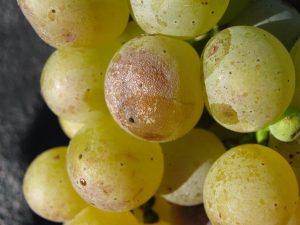
Ripe Rot: Currently, the following fungicides are recommended for managing ripe rot: mancozeb, ziram (FRAC M3), captan (FRAC M4), Aprovia (FRAC 7), Switch (FRAC 9 + 12), Rovral (FRAC 2), and QoI (Strobilurin, FRAC 11). Please note that mancozeb and Aprovia have 66-day and 42-day pre-harvest intervals (PHI), respectively, which may limit your ability to spray them later in the season. Also, a survey conducted by our lab found numerous cases of QoI-resistant isolates. Moreover, it’s essential to understand that no single product provides adequate control.
To effectively manage ripe rot, consider rotating modes of action and using a tank mix that combines at least two different modes of action. The timing of fungicide application is as follows: during bloom, veraison, and 2 weeks after veraison. If you have grape cultivars that will remain on the vines for an extended period after veraison, it’s advisable to apply an additional spray.

This Post Has 6 Comments