Phomopsis cane and leaf spot
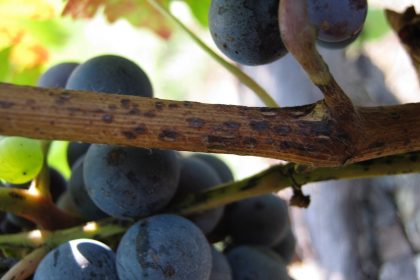
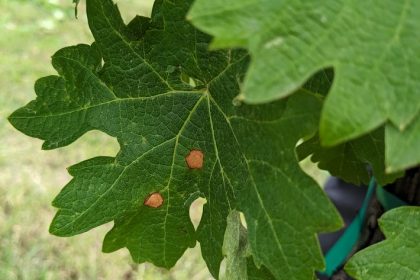
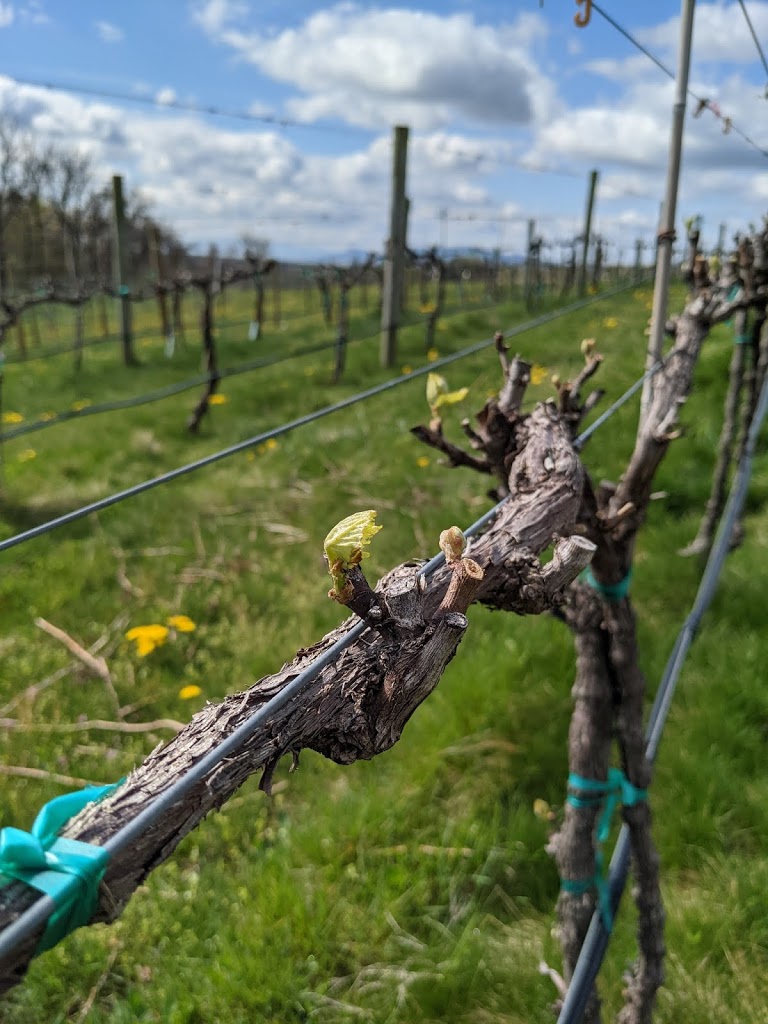
One of the diseases you need to consider soon after bud break is Phomopsis cane and leaf spot. It causes minor leaf spots, which are more evident to the eye, but necrotic lesions cause more severe damage to shoots and rachis. It also causes berry rot; however, it is uncommon in wine grapes due to our spray programs.
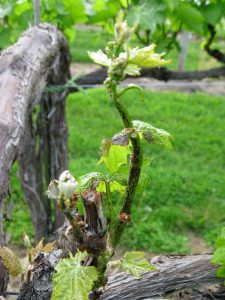
The Phomopsis pathogen requires water for infection, and its spores can germinate in relatively cool conditions (the upper 40s). This pathogen produces spores in spring from previously infected canes and cordons. Thus, springtime rain events are ideal for the development of Phomopsis. It is vital to protect young tissues from spores produced in older canes and trunks, as we have no curative fungicides against Phomopsis.
This disease typically takes a while to establish in the vineyard. Usually, it takes 4-5 years for Phomopsis to become noticeable after you start a new vineyard. However, eradicating this disease is difficult once it is established in a vineyard. Thus, starting your Phomopsis management early in the vineyard’s life is probably a good idea. The fungus survives in canes and trunks that were infected in previous years, and it can cause long-term damage to cordons and trunks. Some cultivars, such as Viognier, Cabernet Sauvignon, and Seyval Blanc, are more susceptible to Phomopsis than others.
If rain events occur after bud break, mancozeb (FRAC = M3, Penncozeb, Dithane, Manzate, etc.), Ziram (FRAC = M3), and captan (FRAC = M4) are useful protectants against Phomopsis. Since shoots will proliferate quickly, you may need to spray a few times against Phomopsis, depending on how much rain we receive. One or two applications, starting from 1-2 inch shoot length and repeated seven to ten days apart, are sufficient in a typical year. After that period, your downy mildew or black rot applications, which happen in the late spring, will cover Phomopsis.
QoI (FRAC = 11), such as Abound and Pristine, and SDHI (FRAC = 7), such as Luna Experience, Miravis, and Aprovia, are also effective. However, you will probably need these materials for the latter part of the season to control other diseases (e.g., ripe rot and bitter rot).
Anthracnose
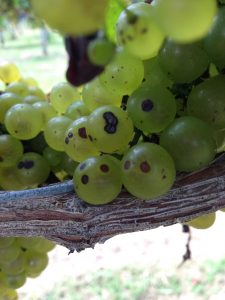
The other disease you may need to consider at this time of year is anthracnose, which is more common in certain hybrid species. Typical symptoms are black, necrotic lesions on leaves, shoots, and fruits, and often the black lesions have an ash-colored center, as if you burnt the leaf or shoot tissue with a cigarette. The management strategies will be similar to those of Phomopsis, and in addition to the list above, Topsin-M (FRAC = 1) is also known to be effective.
Dormant application (be careful with timing; you need to do it a week or two before budbreak.)
A dormant application of lime sulfur (10% in our study, or 1% with Sulforix) is effective against both Phomopsis and anthracnose. Given the corrosiveness of lime sulfur, it is hard to justify the cost and time; thus, the low rate of Sulforix appeals to me. There was a study done in Michigan where a mancozeb application was also successful; however, given the limit on the volume of mancozeb applications per year (~19.4 lb a.i. per acre per year, please check your label), you may wish to keep it to protect green tissues. We found a fixed copper to be ineffective.
The dormant fungicide application can reduce Phomopsis to some extent; however, the application’s efficacy is not strong enough to allow you to skip any preventative fungicide applications to be sprayed soon after bud break. The dormant application knocks down spores produced on the infected canes, but it won’t protect new shoots. Therefore, you still need to protect your shoots when they emerge.
Although I see the benefit of the dormant application, it is another application you need to make. Also, it is more effective to spray mancozeb or captan soon after the bud break. Thus, I typically recommend a dormant lime sulfur application only if you have a severe Phomopsis and/or anthracnose issue and need an extra kick to your regular preventive application after bud break.
The dormant application is less likely to be effective against downy or powdery mildew, as both are polycyclic diseases with a rapid secondary cycle. (Plus, the previous research used a very high concentration of lime sulfur for powdery mildew.) Even if you can knock down the initial inoculum, they can rapidly produce the next round of spores, especially under favorable conditions. These pathogens’ winter survival structures are very tough, so I don’t think a dormant-time fungicide application is the best approach. A dormant lime sulfur application is recommended for the management of ripe rot in Japan. However, there is little data to confirm the efficacy. If you are interested, please let me know so we can set up a trial.
Downy mildew
Downy mildew has become one of our most problematic diseases in the past several years. If you had an outbreak last year, it is a good idea to tighten up your spray schedule to better protect your vines. Some people refer to the three-tens rule, 10 cm shoots, 10 mm rain, and 10 C in temperature (4 in, 0.4 in, and 50F) for the initial spray timing, meaning we need to spray soon after bud break. (This rule may make more sense in arid regions.) This will give us another reason to spray for Phomopsis, so the same spray covers downy mildew.
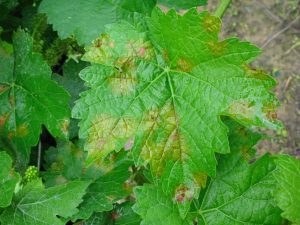
Protective materials for downy mildew are Mancozeb (FRAC M3) [Gavel has mancozeb + zoxamid (FRAC 22)], Captan (FRAC M4), Fixed copper (FRAC M1), Revus or Forum (FRAC 40), or Zampro (FRAC 40 + 45), or Ranman (FRAC 21)). NOTE: There are increasing cases of Revus-resistant downy mildew isolates in VA. Plus, resistance to Ranman is known among downy mildew pathogens of other crops. Thus, make sure to mix these with mancozeb, captan, or copper.
Kickpack materials are phosphonate (Phostrol, Prophyt, etc., FRAC P07) and Ridomil products (FRAC 4). Please note that “Kick-back” means that you can apply it after the rain to control the ongoing infection. It doesn’t mean you should spray after you see downy mildew. If you apply them after seeing downy mildew, you increase the risk of fungicide resistance developing in your vineyard.



This Post Has 3 Comments